

In under a decade, GLP-1s have evolved from an established diabetes therapy into one of the most commercially significant drug classes in pharma history, driven largely by their success in obesity.
Yet what comes next may be even bigger. As treatments become more affordable, access broadens and oral GLP-1s make therapy more convenient, millions of additional patients could become eligible—potentially more than doubling the market by 2035.
Unsurprisingly, the race to capture a share of this ever-expanding market has become fierce among drugmakers. So far, superior efficacy has been the defining driver of market leadership. But will that still be true in the years ahead?
Here’s what we think will define the next generation of GLP-1 market leaders.
Efficacy is now table stakes
For most of its short history, the GLP-1 race has followed a simple rulebook: deliver more weight loss than your competitor does. And for years, it worked.
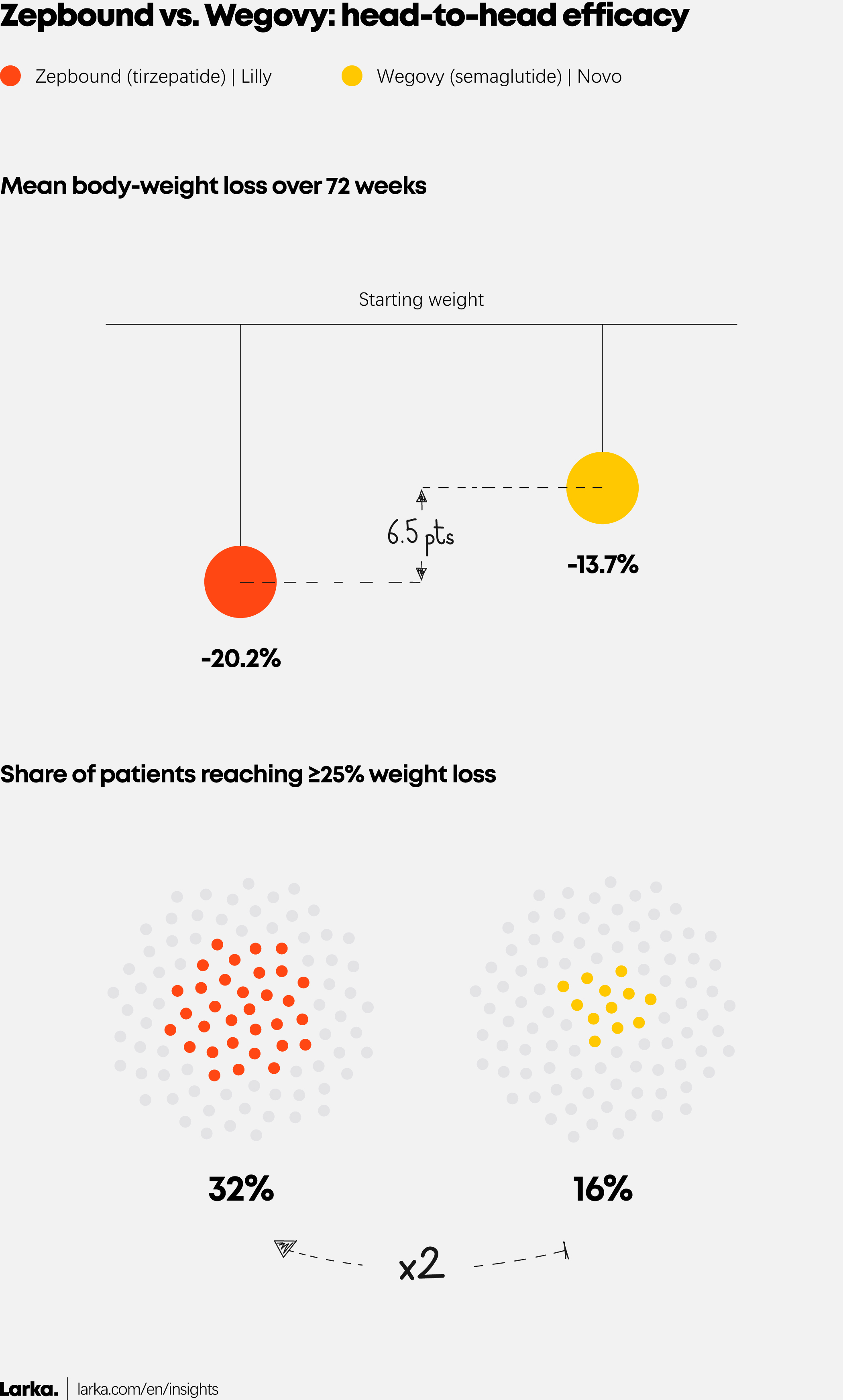
Novo Nordisk established the category with Ozempic for type 2 diabetes and Wegovy for obesity, both based on semaglutide. Eli Lilly later entered the market with Mounjaro for type 2 diabetes and Zepbound for obesity, both based on the dual GIP/GLP-1 agonist tirzepatide. Lilly’s therapy set a new benchmark for obesity treatment: in the first head-to-head trial comparing the two obesity therapies, Zepbound achieved an average weight loss of 20.2% versus 13.7% for Wegovy after 72 weeks.
Superior efficacy drove physician confidence, accelerated patient adoption, and handed both companies dominant market positions. Then the pipeline caught up.
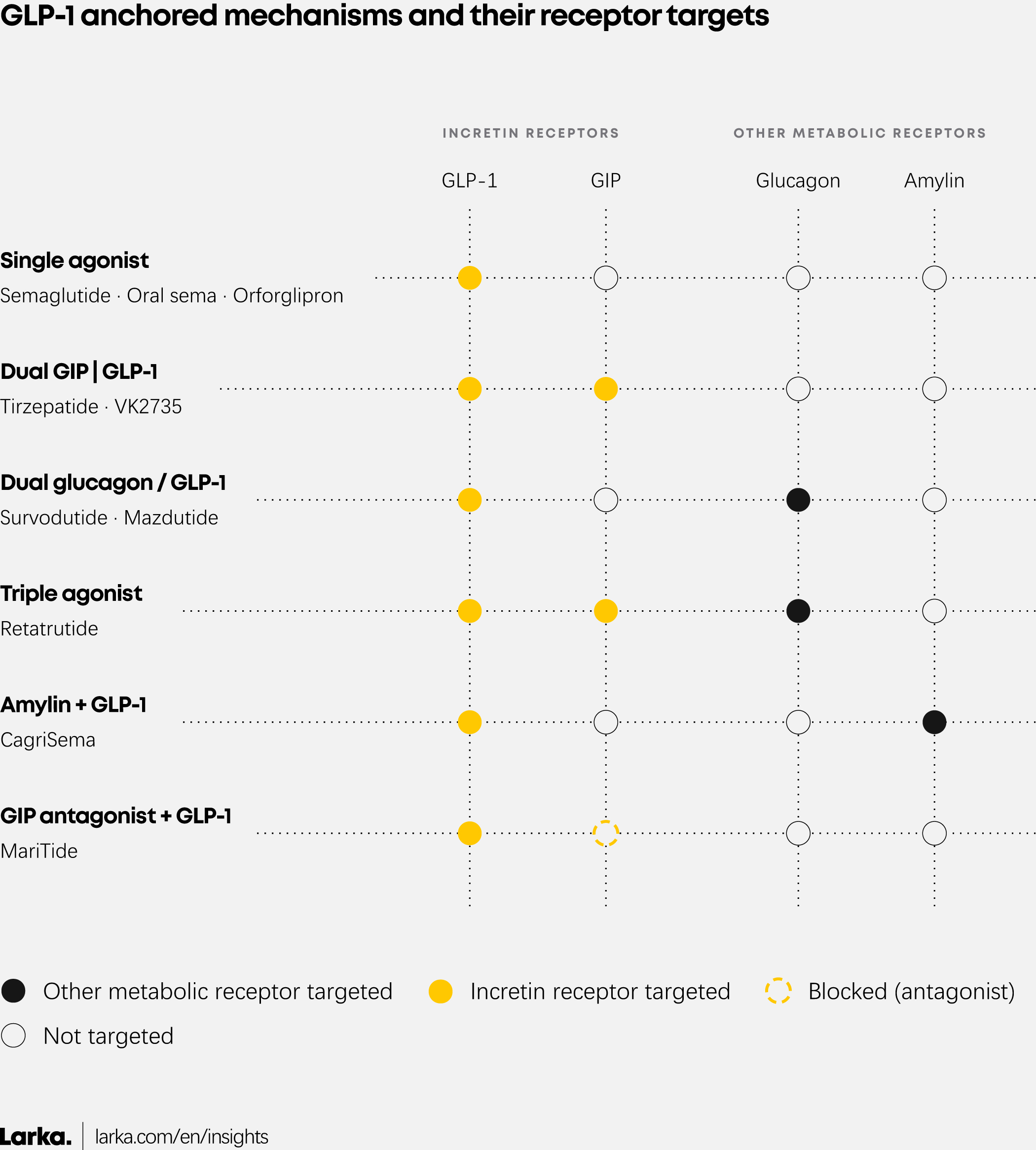
Next-generation candidates—including dual agonists, triple agonists, amylin combinations and oral therapies—are all pursuing increasingly ambitious efficacy targets. Several are already delivering weight loss above 20%, while Lilly's investigational triple agonist retatrutide has reported mean weight loss of 28.3% after 80 weeks in Phase III and up to 30.3% after 104 weeks in the ongoing TRIUMPH program, further raising the bar for obesity treatment. As more molecules cluster near that threshold, efficacy looks increasingly like a baseline expectation rather than a lasting edge.
Winning the next phase
So if efficacy is now table stakes, what will it take to win the next phase? The answer is likely to lie on harder ground: long-term safety, payer access, patient convenience, manufacturing scale, and portfolio breadth. Increasingly, Lilly and Novo are competing less on pure molecule performance than on their ability to execute across the entire value chain.
Oral GLP-1s: winning through patient adoption
One of the biggest obstacles to wider GLP-1 adoption has always been the mode of administration. While weekly injections have become increasingly accepted, they remain a barrier for many patients who are reluctant to start or maintain long-term therapy.
Oral GLP-1s have the potential to fundamentally change that equation. By offering a more convenient treatment option, they could encourage more patients to initiate therapy, improve long-term adherence, and enable physicians to prescribe GLP-1s earlier in the patient journey.
Two platforms, two technologies
Novo Nordisk and Eli Lilly now compete in oral obesity through fundamentally different technological approaches.
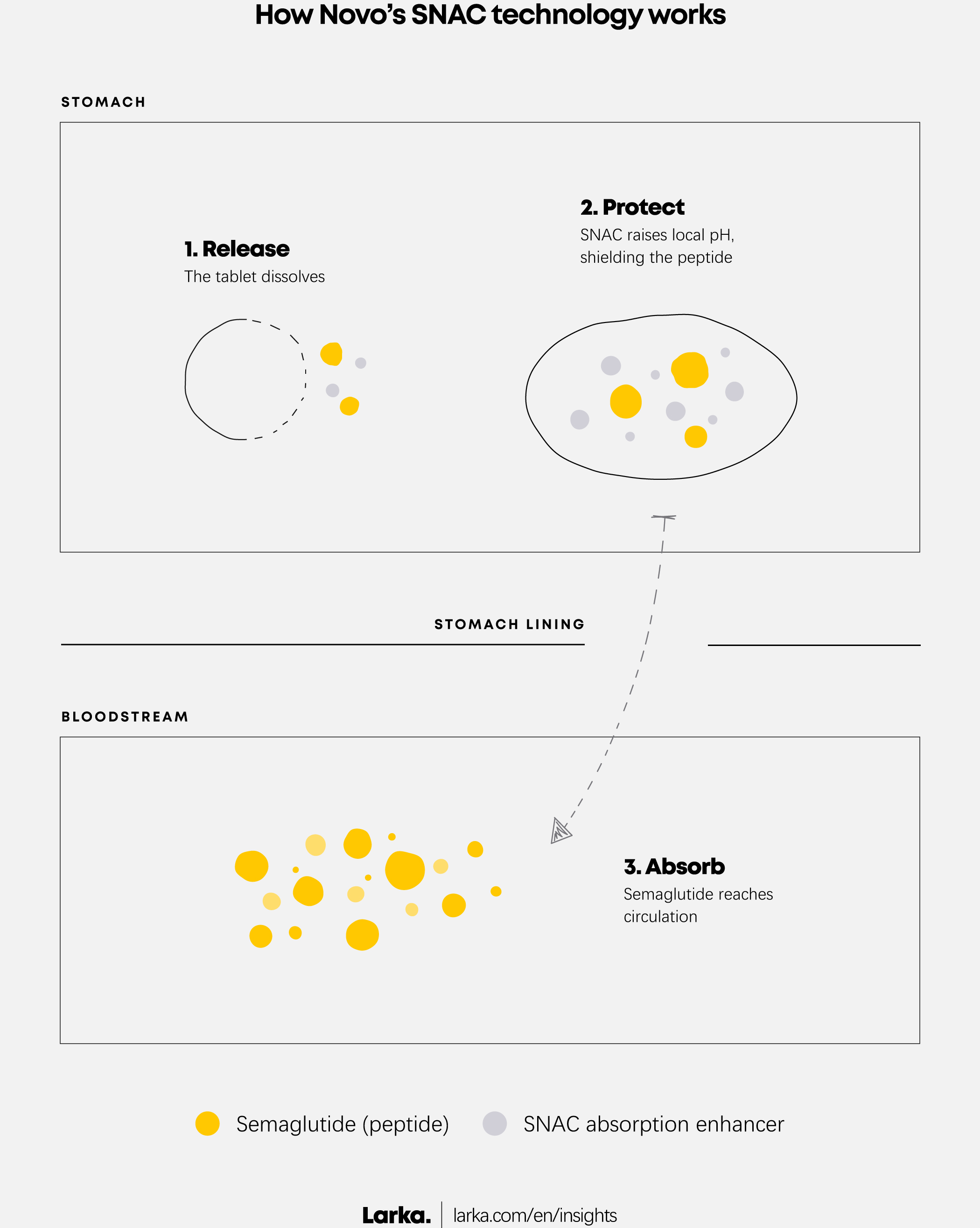
Novo's strategy builds on semaglutide, a peptide originally developed for injection. Oral delivery was achieved through formulation technology—known as SNAC—which raises the local pH in the stomach to inactivate digestive enzymes that would otherwise degrade the peptide, while also enhancing its permeation across the gastric epithelium. Lilly's approach on the other hand, follows a different path: orforglipron is a small molecule that targets the same receptor but was designed for oral administration from the outset.
What makes them different
Efficacy comparisons between the two products remain difficult to interpret. Cross-trial analyses are limited by differences in study design, patient populations and endpoints, and while Novo appears to hold an efficacy edge on the figures as reported, that gap may narrow under a like-for-like reading—leaving the ranking provisional rather than settled.
Yet the two therapies differ in how patients use them: oral semaglutide requires a structured routine of fasting, water and timing, whereas orforglipron carries no comparable restrictions. They also differ on the label—orforglipron approval came with post-marketing obligations and a caution around oral contraceptive effectiveness that oral semaglutide does not carry. As oral therapies become more widely available, convenience, treatment simplicity and real-world usability may matter as much as clinical performance.
Expanding the market, not just redistributing it
The greatest opportunity for oral GLP-1s may not be taking share from injectable products, but expanding the overall market.
Early evidence already points in that direction. Novo Nordisk recently announced that over 80% of its Wegovy pill prescriptions were written for patients who had never previously received a GLP-1 therapy—and Lilly reports the same dynamic for early orforglipron prescriptions. Rather than simply replacing injectable treatments, oral formulations appear capable of attracting an entirely new patient population: those with earlier-stage obesity, those hesitant to use injections, or individuals seeking a simpler option.
The strategic implications are considerable. Convenience is emerging as a competitive axis in its own right—and while Lilly and Novo Nordisk are investing heavily to stay ahead, oral is also where a growing field of challengers sees its opening. The companies that lead here may do more than launch another product; they could redefine who gets treated in the first place.
Mastering manufacturing at scale
The unprecedented success of GLP-1 therapies has created a challenge few pharmaceutical companies have experienced before: demand has consistently outpaced supply.
Over the past few years, shortages of both Wegovy and Zepbound have highlighted a new reality of the obesity market: developing a breakthrough therapy is no longer enough if companies cannot manufacture sufficient volumes to meet global demand.
The Complexity Behind Every Injection
For Lilly and Novo Nordisk, manufacturing has become a strategic priority. Every additional production line represents not only greater supply, but also the ability to capture market share in one of pharma's fastest-growing markets.
But scaling production is far from straightforward. Injectable peptide therapies rely on highly specialized capabilities—including injection molding, pen assembly, recombinant fermentation or solid-phase peptide synthesis, sterile fill-finish and cold-chain logistics—all requiring dedicated facilities, technical expertise and years of investment. Capacity cannot be built overnight, making manufacturing one of the industry's biggest barriers to growth.
The scale—and timing—of recent investments illustrates this shift. Just two months after declaring the tirzepatide shortage over, Eli Lilly announced a further $27 billion investment to build four new US manufacturing sites, including three dedicated to active pharmaceutical ingredients. Meanwhile, Novo Nordisk secured three key Catalent fill-finish facilities in Bloomington, Brussels and Anagni through Novo Holdings' $16.5 billion acquisition of Catalent, bringing long-standing manufacturing assets for Wegovy under its own control. Although the two companies have adopted different strategies—Lilly rapidly expanding capacity while Novo further integrating its manufacturing network—they are both pursuing the same objective: securing long-term supply in a market where manufacturing has become a decisive competitive advantage.
How oral therapies change the equation
Oral therapies introduce a different manufacturing dynamic. Small-molecule orals, such as Lilly’s orforglipron can be produced through conventional pharmaceutical chemistry and distributed as tablets, without the cold-chain requirements of injectable peptides—opening access to a broader manufacturing ecosystem and potentially different scaling economics.
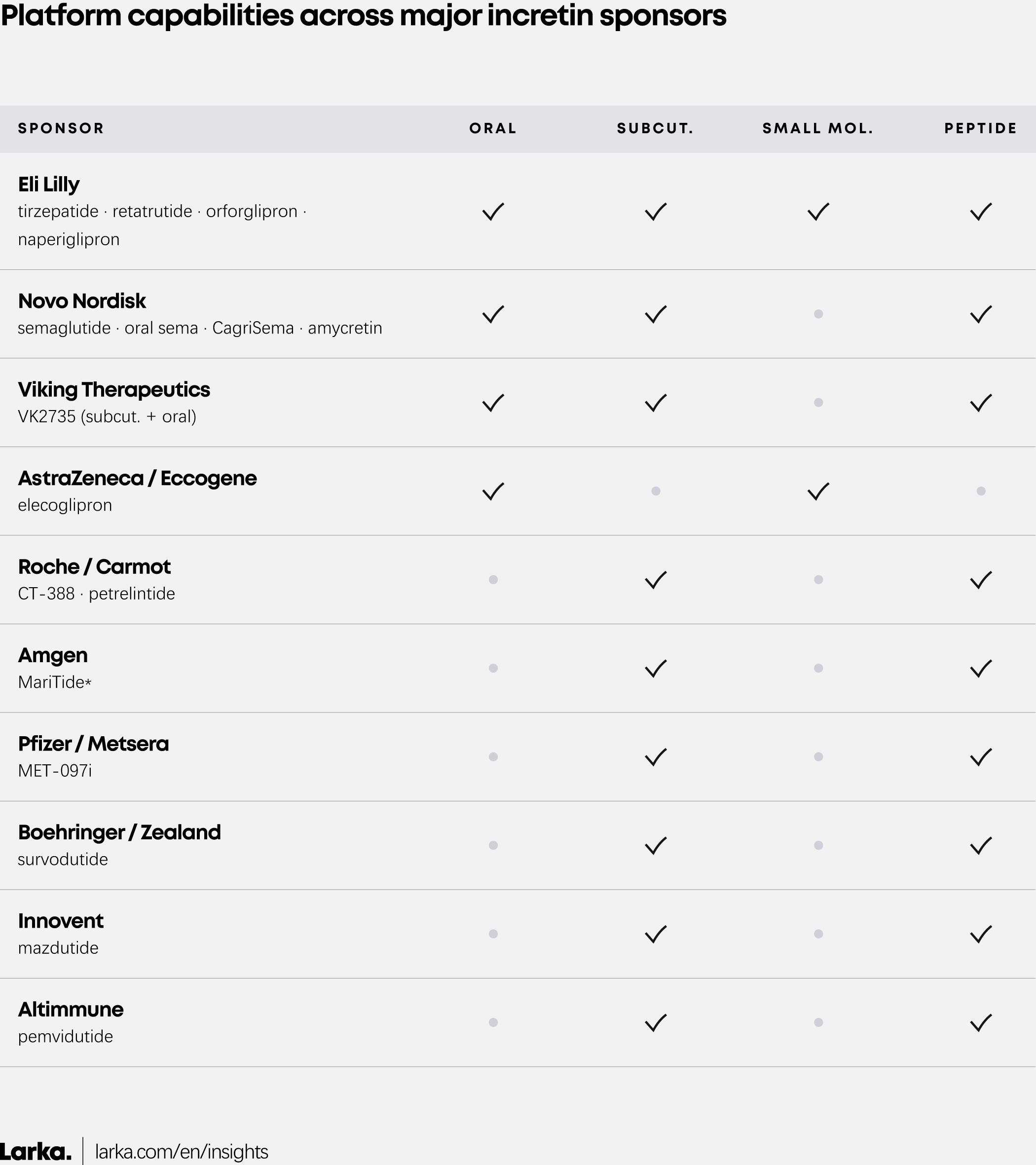
But oral is not a single category. Oral peptides remain dependent on peptide manufacturing infrastructure, while oral small molecules follow a more traditional supply chain. The result is an increasingly segmented supply chain, where different technologies demand different competencies, supplier networks and investment priorities.
Why this becomes the moat
This segmentation opens the door to a wider range of manufacturing partners—a small-molecule specialist no longer needs peptide capabilities to compete for GLP-1 volume—but it also raises the bar for what it takes to be a strategically indispensable one. A CDMO offering only fill-finish, or only API synthesis for a single modality, risks being reduced to an interchangeable capacity provider, competing on price for slots that Lilly or Novo can just as easily secure elsewhere or bring in-house. The partners best positioned to capture value are those able to support complete modality chains—from active ingredient to finished product—rather than isolated manufacturing steps, much as Novo's acquisition of Catalent's fill-finish sites shows the innovators themselves moving to consolidate what they no longer want to leave to fragmented external supply. Supply reliability shapes not only how quickly patients can access therapy, but also the relationships with physicians, payers and health systems that depend on it.
In other words, manufacturing is no longer just an operational function. It has become a strategic asset—and for contract manufacturers, increasingly a condition of remaining relevant rather than being commoditized out of the value chain.
From blockbuster drugs to portfolio breadth
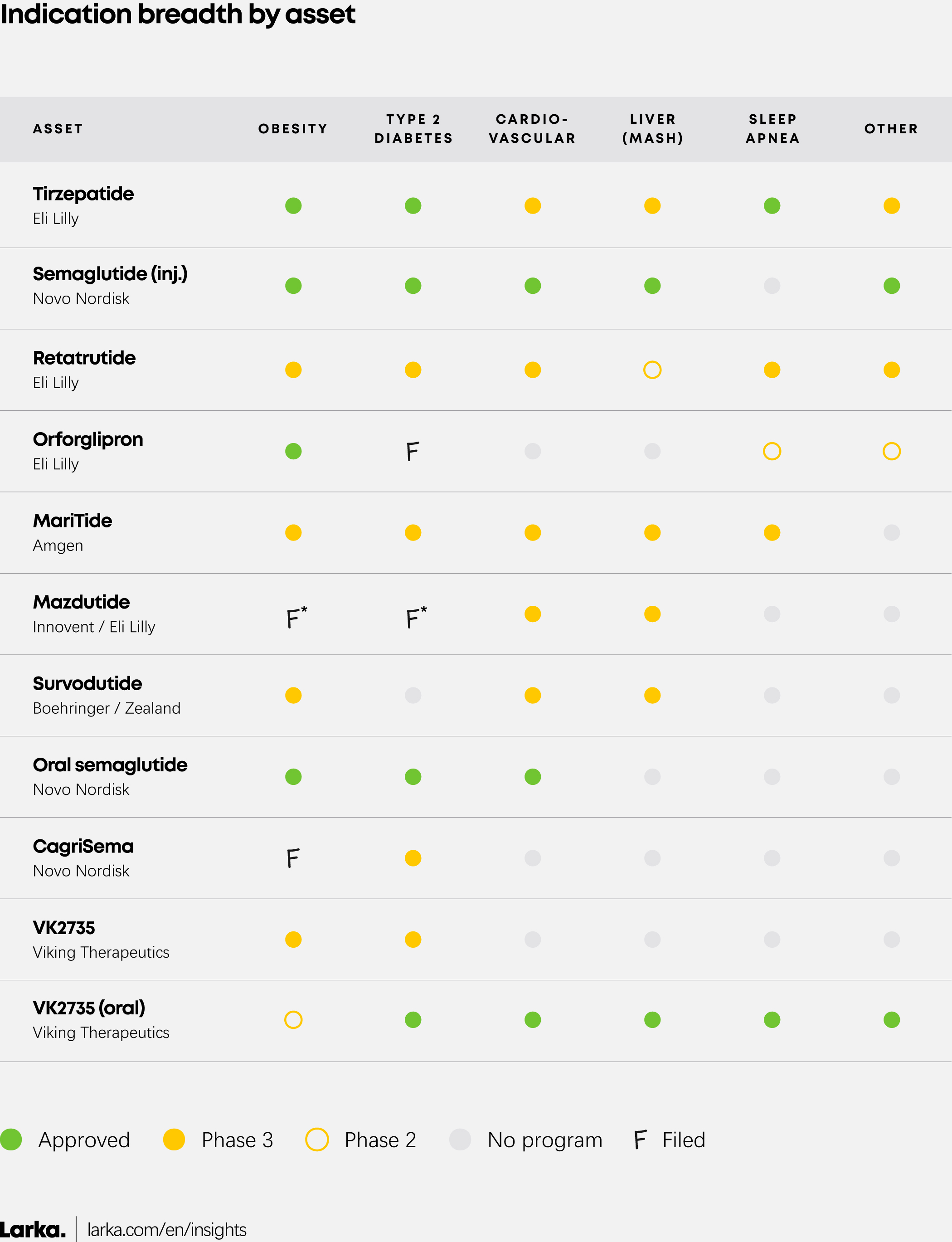
The obesity market is gradually evolving from a product race into a portfolio race. While today's competition is centered on blockbuster GLP-1 therapies, tomorrow's leaders are already building broader metabolic franchises designed to address multiple diseases and patient populations.
That shift is evident across the industry. Beyond Lilly and Novo Nordisk, challengers such as Amgen (MariTide), Viking Therapeutics (VK2735, including an oral form), Boehringer Ingelheim/Zealand Pharma (survodutide) and Innovent (mazdutide) are each pursuing multi-indication development spanning obesity, type 2 diabetes, cardiovascular risk, MASH and sleep apnea—not just building a single blockbuster, but positioning for the same portfolio logic as the incumbents. The objective is no longer simply to launch the most effective obesity drug, but to build a portfolio that supports patients throughout their treatment journey.
Building the next generation of metabolic franchises
Several opportunities are driving this expansion. Combination therapies are expected to improve efficacy, tolerability and muscle preservation, while new indications such as cardiovascular disease, MASH and chronic kidney disease continue to broaden the commercial potential of the incretin class.
This strategy also reduces dependence on any single asset. Rather than relying on one blockbuster product, companies are building diversified portfolios capable of generating value across multiple indications, treatment stages and patient populations.
In the long run, portfolio breadth may prove to be a more durable competitive advantage than any individual molecule. The companies that build the strongest metabolic franchises—not simply the most effective GLP-1—may ultimately be the ones that take home the belt.
The next phase of the GLP-1 race will be won by companies that think beyond the molecule. Expanding patient adoption through oral therapies, manufacturing reliably at scale and building broad metabolic franchises will separate winners from the pack, on top of solid clinical outcomes. The strongest ecosystem—not just the strongest product—will ultimately define market leadership.
